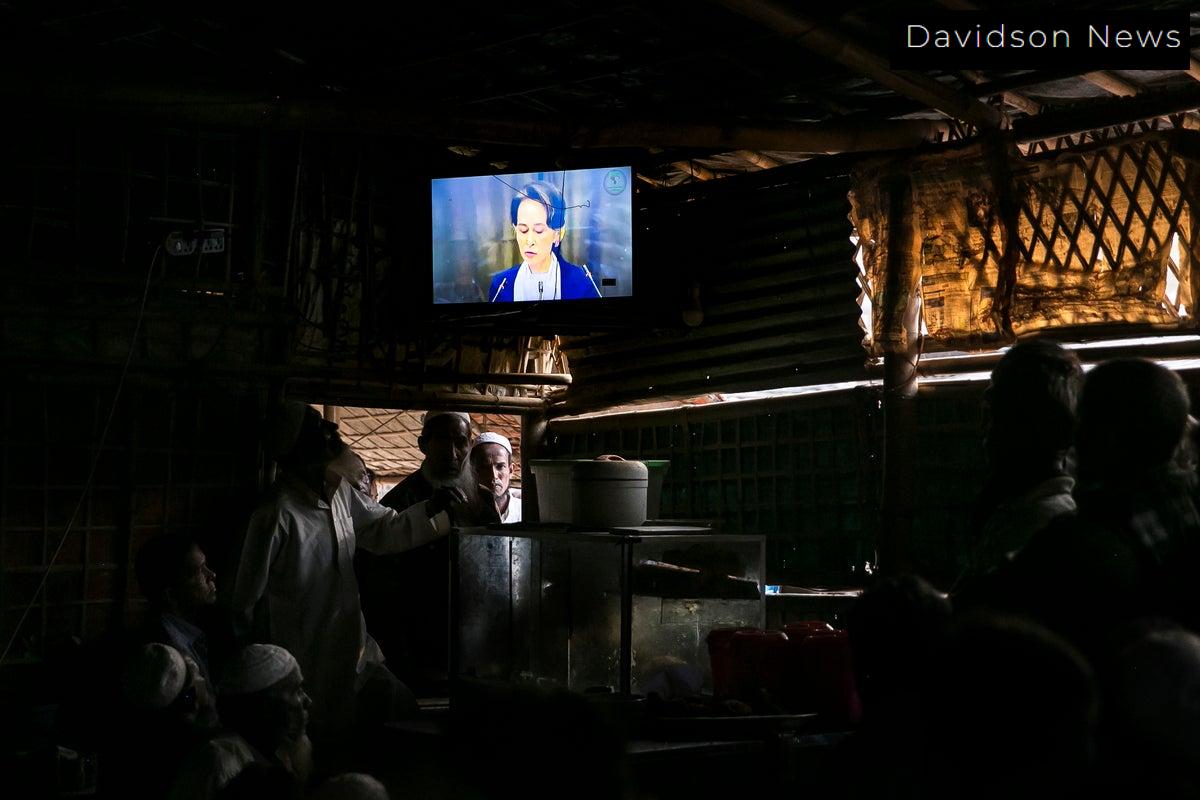
Myanmar, a country in Southeast Asia, has been in the news for many troubling reasons lately. As its people navigate the aftermath of the military coup in 2021, refugees and political leaders alike are facing a myriad of challenges. Reports indicate that many of Myanmar’s Rohingya refugees in Bangladesh are voicing their opinions about Aung San Suu Kyi, the country’s former leader, while U.S. analysts warn of China’s growing influence over Myanmar, complicating the nation’s already tumultuous political landscape.
Mixed Feelings Among Rohingya Refugees
In the crowded refugee camps of Cox’s Bazar, Bangladesh, many Rohingya people are expressing their complex feelings about Aung San Suu Kyi. While she once stood as a symbol of hope and democracy, opinions have shifted dramatically since the military took over in 2021. Some refugees believe that Aung San Suu Kyi’s release could help them return home to Myanmar. Others point fingers at the military and the Arakan Army for being primarily responsible for their suffering and displacement.
- Many refugees remember how Aung San Suu Kyi’s father fought for their rights.
- Despite her previous denials of accusations of genocide at the International Court of Justice, some Rohingya still hold onto the hope that she could one day help them return to their homeland.
- The ongoing situation is dire, as the UN has announced plans to significantly cut food rations for the refugees, leaving them even more vulnerable.
China’s Expanding Influence
As the political climate in Myanmar continues to weaken, China’s influence is growing. Analysts highlight that the country’s strategic location makes it a focal point in the competition between the U.S. and China. The military government of Myanmar heavily relies on China for economic and military support, as reported by various analysts. They fear this dependency may hinder Myanmar’s chances for a democratic recovery.
- Myanmar’s unique position has made it valuable in trade and military discussions.
- China controls approximately 90% of the global rare earth processing market, and Myanmar is seen as a key player in supplying these valuable resources.
- As U.S. interests in the region could shape future actions, Secretary of State Marco Rubio emphasizes a new approach to foreign policy that could include more support for Myanmar.
Election Plans Amidst Turmoil
Despite the chaos, Myanmar’s military government has announced plans for a national election to be held in late 2025 or early 2026. Led by Senior General Min Aung Hlaing, the junta insists that the elections will be “free and fair.” However, many critics strongly disagree with this claim. They argue that true freedom and fairness are impossible under current conditions, where political repression and military control dominate.
- Fifty-three political parties have submitted lists to participate, but skepticism remains high among the populace.
- This election is set against a backdrop of civil war and extensive opposition to military rule.
- The military’s credibility is challenged, as it does not control large areas of the country, raising concerns over the logistical implementation of the upcoming election.
The Future of Myanmar’s People
The ongoing struggles facing the Rohingya refugees, the complex political scenarios surrounding Aung San Suu Kyi, and the looming influence of China create a challenging environment for Myanmar’s people. Their hopes for a better future remain intertwined with the outcomes of international policy decisions and the fragile internal political landscape. As the world watches and waits, the stories of those directly affected by these events continue to emerge, reminding us of the resilience and courage of the human spirit amidst turmoil.