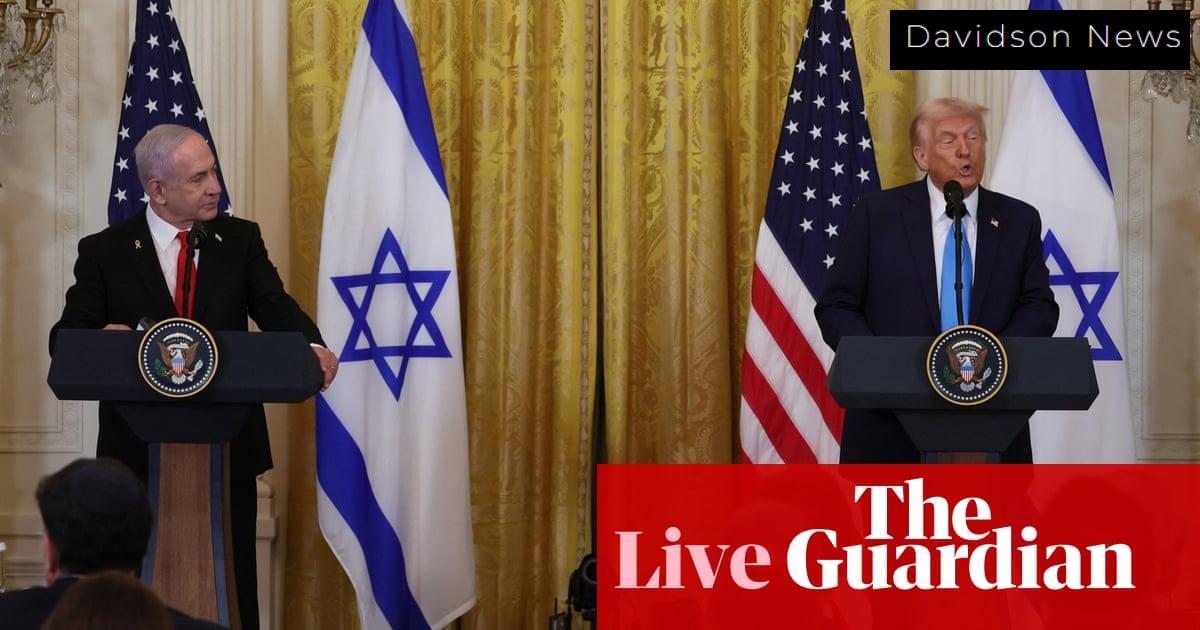
In a surprising move that has sparked outrage and concern across the globe, former President Donald Trump recently proposed a plan for the United States to take control of the Gaza Strip, suggesting the territory could be transformed into something akin to a luxurious ‘Riviera of the Middle East.’ This proposal came during a joint press conference at the White House with Israeli Prime Minister Benjamin Netanyahu, raising questions about the implications for the Palestinian people and regional stability.
A Bold and Shocking Proposal
During their meeting, Trump boldly stated that the U.S. should take over Gaza and even suggested that the area should be ‘leveled’ for redevelopment. He painted a picture of a future where Gaza would become an ‘international city’ and would be developed by the United States. This lofty vision challenges the existing political landscape and ignites concerns over the fate of the roughly 2 million Palestinians currently living in the region.
Immediate Backlash and Reaction
Reactions to Trump’s plan have been swift and critical. Hamas responded vehemently, describing the proposal as a ‘recipe for chaos.’ The Palestinian envoy to the United Nations also rejected the notion of displacing Palestinians, emphasizing that ‘our homeland is our homeland.’ Outside the White House, pro-Palestinian protesters voiced their dissent, making it clear that many view this plan as not only unrealistic but also harmful to peace efforts.
International Concerns
Notably, leaders in neighboring countries have expressed their opposition to the idea of relocating Palestinians. Jordan, Egypt, and Saudi Arabia have all raised concerns about the displacement of people and the potential for increasing instability in the region. Trump, however, remains optimistic, asserting that these countries will accept Palestinian refugees and that the plan aims for Palestinians to ‘live in comfort and peace.’
Trump’s Vision for Gaza
Imagining Gaza as a place bustling with tourists and activity, Trump suggested international investment would turn this area into a hub of beauty rather than a center of conflict. He claims that this grand plan, while ambitious, has potential backing from others in the region and that it could lead to a much-needed resolution to the ongoing Israeli-Palestinian conflict. Yet, many experts warn that his vision seems more like a fantasy than a feasible solution.
Political Reactions at Home
Trump’s plan is not only facing challenges internationally; it has also ignited a firestorm of debate among U.S. politicians. Some Democratic leaders have called the proposal ‘sick,’ while certain Republican members have expressed skepticism about the wisdom of such a controversial approach. Concerns center around the idea that this could undermine existing peace negotiations and trigger more violence in a region that is still reeling from conflict.
What’s Next?
As events unfold, Trump has indicated that he plans to visit the region to discuss his proposals further. With international relations hanging in the balance and local sentiments running high, the outcome of Trump’s vision for Gaza remains unclear. Will this bold new plan pave a road to peace, or will it deepen existing divides? Time will tell, but for now, the world watches closely, waiting for the next developments in this unfolding story as discussions around the future of Gaza and its people continue.